
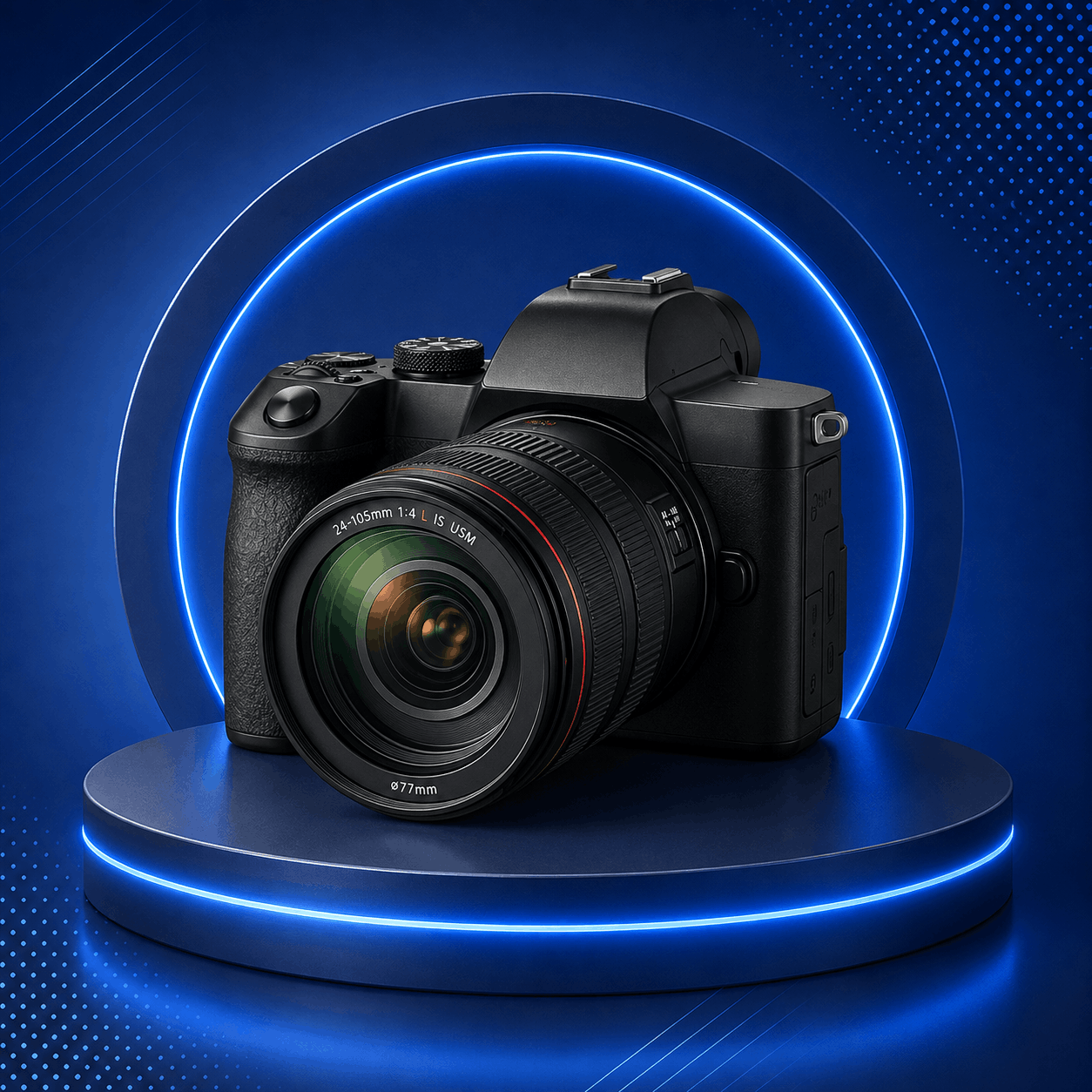
Digital Camera Compliance for the Indian Market
A Digital Camera is classified as one of the controlled categories called "Electronic & IT Goods" and needs to achieve compliance of their product in order to commercialize their product in India. It is important to get the registration of BIS CRS as a safety requirement for manufacturers and brands who plan to launch in India, while e-waste registration through EPR is needed in order to take care of the environmental requirements of electronic goods.
Businesses that import or manufacture digital cameras should ensure compliance ahead of time, either prior to shipping, production, or even listing the product. ECS India provides assistance to manufacturers, importers, and brand owners for the assessment of their products, documentation, test coordination, and regulatory applications, making the compliance process much easier.
Key Compliance Highlights
| Particular | Details |
|---|---|
| Product Name | Digital Camera |
| Product Category |
Electronic & IT Goods, Electrical and Electronic Equipment |
| Environmental Compliance | EPR Registration for E-waste |
| BIS Compliance |
BIS CRS Registration |
| Applicable Standard |
IS 13252 (Part 1):2010; IS/IEC 62368-1:2023 as applicable under the updated framework |
| CRS Category | IS 13252:2010; IS/IEC 62368-1:2023 |
| BEE Requirement |
CEEW19 |
| Compliance Status | Mandatory |
| Key Authorities | MeitY and MoEFCC |
Required Certifications for Digital Camera
BIS CRS Registration for Digital Camera
The digital camera under the relevant CRS regulations must be registered with BIS prior to launching it in the Indian market. Product testing is performed at a BIS recognized laboratory, and then an application along with other relevant documents is submitted to BIS. BIS explicitly mentions Digital Camera under IS 13252 (Part 1):2010.
Documentation usually consists of the brand/trademark information, factory information, test report, product specifications, PCB and key component information, and the user manual.
EPR Registration for E-waste
Digital cameras contribute to generating electronic waste at the end-of-life stage. Compliance with EPR requirements is an essential requirement that should be borne by those producers and importers who manufacture cameras. Under the EPR principle, companies are obliged to manage their obligations concerning collecting and recycling of electronic waste.
Applicable Indian Standards
The stated compliance framework for Digital Camera includes:
IS 13252 (Part 1):2010 - Information Technology Equipment – Safety: Part 1, General Requirements.
IS/IEC 62368-1:2023 - the updated safety standard referenced for applicable electronic equipment.
CEEW19 - product category reference associated with the applicable e-waste compliance framework.
The exact standard and testing route should be confirmed against the product's construction, functionality and current regulatory scope before testing.
Products Covered
This may include complete digital cameras intended to capture, process, and store digital images or similar visual data.
If certain capabilities like USB capability, internal memory, removability of memory, interface with displays, or electronics modules are present in the particular product configuration, these may influence the assessment. ECS India can provide a review of the technical specification prior to application.
Who Needs the Certification?
The compliance requirement may pertain to manufacturers or companies bringing the product into the Indian market, such as:
- Indian manufacturers of digital cameras
- Foreign manufacturers supplying products to India
- Importers and brand owners
- Businesses launching cameras under their own brand
- Companies sourcing finished products from overseas manufacturers
An importer or distributor should not assume that its supplier's compliance automatically covers every brand, model or manufacturing location. Product and brand details need to be assessed individually.
What are the Required Certifications for a Digital Camera in the Indian Market?
There are basically two certifications required; BIS CRS Registration (for meeting product safety requirements), and EPR Registration (e-waste).
While BIS certification is related to conformity with Indian Safety Requirements, EPR is related to product e-waste requirements throughout its lifecycle. It is useful to consider these two certification paths as distinct in order to ensure the right documentation is prepared by the business.
How to Get Certification for a Digital Camera to Sell in India?
The process generally follows a structured sequence:
Product assessment - Determine the applicable CRS standard and EPR category.
Document compilation - Collect all technical, manufacturing, and business-related documents.
Product testing - Send the sample for testing at a BIS recognized lab as applicable.
BIS application - Apply for the registration along with test reports and other documentation.
EPR application - Prepare the required information regarding the product, company, and its e-waste management.
Assessment queries - Address the issues that may arise during the assessment phase.
Maintenance of compliance - Maintain the records of compliance throughout.
In case of a foreign company, an "Authorized Indian Representative" may be required as per BIS certification process.
Why Choose ECS India?
At ECS India, we provide end-to-end assistance for compliance, as opposed to certification being treated like just paperwork. We can help with applicability testing of products, documentation, lab arrangements, application filling, regulatory correspondences and approvals.
This is particularly helpful for manufacturers and brands that come from overseas, especially when there needs to be an alignment between technical specifications, factory documents, and regulatory requirements in India.